

Summary:
-
Consciousness evolution is a real puzzle with practical answers, not just a philosophical mystery.
-
ALARM theory breaks down consciousness into basic categories, showing evolutionary advantages like longevity and environmental understanding.
-
Consciousness starts with basic arousal for survival, then progresses to targeted alertness for learning and reflexive self-consciousness for complex decisions.
Consciousness is one of those mysteries we usually chalk up to philosophy or late-night thought experiments but scientists are now treating it like a real evolutionary puzzle with practical answers. Instead of asking how consciousness works, new research is asking why it evolved at all. In late 2025, scientists from Ruhr University Bochum suggest awareness wasn’t a random upgrade for deep thinking. Their findings indicated that consciousness is not a light switch that can be turned on or off, rather it is a product of evolution and a tool with different layers. Let us look at the main reasons that might explain why we got consciousness in the first place.
Consciousness Isn’t All-or-Nothing

Researchers propose it’s a multi-layered thing, not a sudden superpower. It starts basic and builds up, helping organisms at each stage without needing everything at once. This graded view explains why some animals have bits of it while others don’t.
The ALARM Theory Breakdown
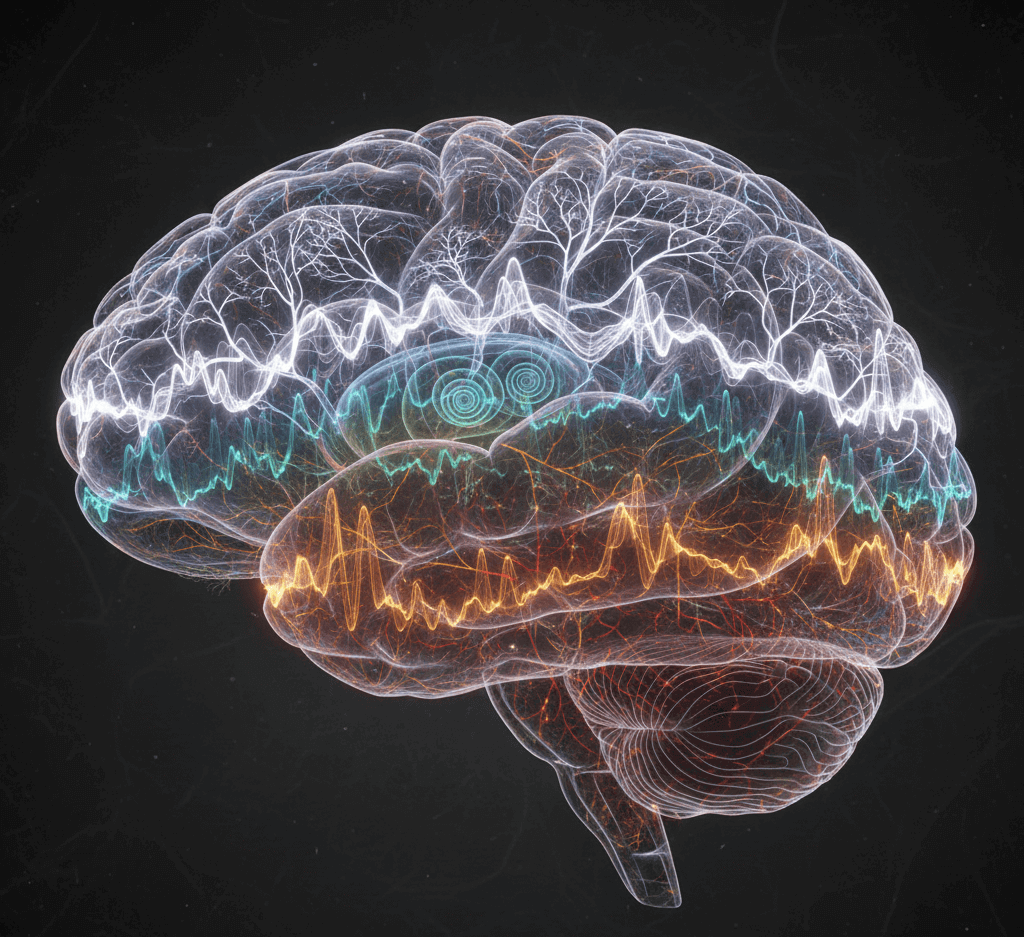
With the introduction of the new paradigm ALARM (Arousal, Learning, Alertness, Reflexive, Meta), it is possible to demarcate three basic categories of phenomenal consciousness. The framework associates these categories with actual evolutionary advantages, such as longevity and better understanding of the environment.
Basic Arousal for Survival

ADVERTISEMENT
The simplest level is just waking up and reacting to threats like pain or alarm signals. This probably kicked things off, giving early creatures a quick edge in avoiding danger without complex brains.
Targeted Alertness for Learning

Next up: focused awareness that lets you spot patterns and correlations in your environment. Smoke means fire, sure, but deeper links too. This boosts learning way beyond simple reactions.
Reflexive Self-Consciousness

The advanced stage where you reflect on yourself, your past, and future plans. It helps with complex decisions, social stuff, and coordinating in groups huge for humans and some smart animals.
Why It Helps Socially

ADVERTISEMENT
Higher consciousness shines in groups: better communication, predicting what others think or feel. It might have evolved partly for teamwork, not just solo survival.
Birds Prove It’s Not Cortex-Only

Birds show conscious traits without our big cerebral cortex. Their different brain setup (like the nidopallium caudolaterale) does similar jobs, proving evolution finds multiple paths to awareness.
Conscious Birds in Action

Research involving pigeons, crows and roosters indicates both self-recognition and situational awareness. They modulate their action according to mirrors or spectators, which may be a sign of rudimentary self-consciousness.
Evolutionary Trade-Offs

Not every species needs full consciousness, like trees thrive without it. But for mobile, social critters facing unpredictable worlds, subjective experience gave a real boost.
Bigger Implications Ahead
This work ties consciousness to practical functions, opening doors for understanding animal minds, AI ethics, and even disorders. It shifts the question from “how” to “why,” feeling like a genuine step forward.