

Summary:
-
ICE Barcelona 2026 merges esports and payment tech in a groundbreaking event focused on convergence and innovation.
-
The event features a dedicated Esports Arena, EA FC-style tournaments, and a focus on real-time payout technology.
-
ICE Barcelona 2026 positions itself at the forefront of the industry, emphasizing the intersection of esports, payment systems, and live competition.
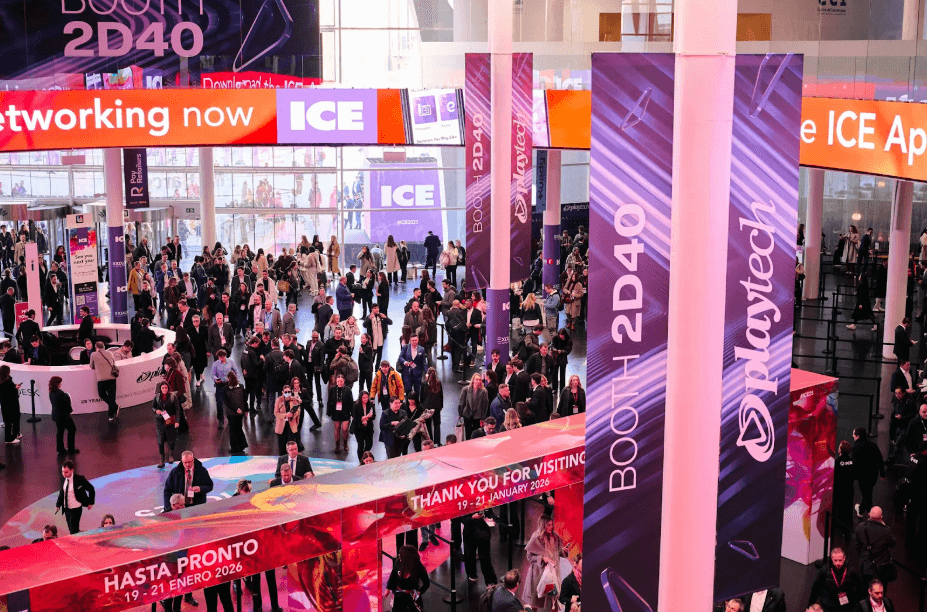
ICE Barcelona 2026, scheduled for January 19–21, is positioning itself as a landmark edition where competitive esports and next-generation payments technology converge in a single, highly visible setting. This straight news preview focuses on how organizers are reshaping the show floor to reflect the real-world overlap between gaming, streaming culture, and real-money infrastructure. With a dedicated Esports Arena hosting EA FC-style tournaments and a strong presence from payout-speed and payments vendors, ICE Barcelona 2026 is being framed as a hub where live competition, real-time data, and transaction technology coexist rather than operate in silos.
ICE Barcelona 2026: A New Direction for the Global Gaming Calendar
ICE Barcelona 2026 represents a deliberate shift in how major gaming exhibitions present the industry’s future. Taking place from January 19–21, the event is structured to emphasize convergence rather than separation between product categories. Organizers are clearly responding to changes in user behavior, where esports of spectatorship, interactive streaming, and real-money gaming are consumed through the same digital ecosystems. Instead of isolating esports or payments as niche verticals, ICE Barcelona integrates them into the core identity of the event. This approach reflects a broader industry acknowledgment that engagement, trust, and speed now define competitiveness as much as content or branding.
The Dedicated Esports Arena Takes a Central Role
A defining physical feature of ICE Barcelona 2026 is the fully dedicated Esports Arena, which is being placed at the heart of the venue rather than on its periphery. This decision signals that esports are no longer treated as supplemental entertainment but as a central pillar of the modern gaming industry. The arena is designed to operate continuously across all three days, ensuring that live competition remains a constant draw for attendees. By embedding esports so visibly into the event layout, organizers are reinforcing its commercial relevance and its ability to attract both industry professionals and digitally native audiences accustomed to live, interactive formats.
EA FC-Style Tournaments as a Flagship Attraction
EA FC-style tournaments are expected to serve as one of the main competitive attractions within the Esports Arena, leveraging the global familiarity of football-based esports formats. These tournaments appeal to a wide demographic that spans traditional sports fans, esports followers, and casual viewers, making them a strategic choice for a high-traffic showcase. Their inclusion aligns with Europe’s strong football culture while also demonstrating how established sports franchises translate into digital competition. At ICE Barcelona 2026, EA FC-style tournaments are positioned not only as matches to watch, but as live demonstrations of how mainstream sports IP continues to drive engagement in esports environments.
Live Esports as a Business, Not a Side Show
At ICE Barcelona 2026, live esports competitions are framed as a functioning business ecosystem rather than a standalone spectacle. Match play is supported by production-quality broadcasts, audience interaction tools, and visible performance metrics, underscoring the professionalization of esports operations. This presentation places esports in the same commercial conversation as betting platforms, payments infrastructure, and data services. By showcasing competitive play alongside operational technology, the event highlights how esports now intersect directly with monetization strategies, sponsorship models, and platform scalability.
Payments and Payout-Speed Vendors Dominate the Show Floor
Another major theme at ICE Barcelona 2026 is the prominence of payments and payout-speed vendors across the exhibition space. These companies are no longer confined to backend discussions or closed-door meetings. Instead, they occupy visible positions alongside esports activations and live demos. This placement reflects the growing understanding that transaction speed and reliability are user-facing features that influence brand perception. As competition intensifies across gaming platforms, the ability to move funds efficiently has become a key differentiator, and ICE Barcelona 2026 gives these vendors a stage equal to content creators and game developers.
ADVERTISEMENT
Real-Time Payout Technology Enters the Spotlight
Real-time payout technology is being presented as one of the defining innovations on display at ICE Barcelona 2026. Exhibitors are showcasing systems designed to operate continuously, reducing reliance on delayed processing cycles. This shift aligns with the expectations of esports audiences who are accustomed to instant feedback, live results, and immediate outcomes. In gaming environments where trust is closely tied to financial transparency, real-time payouts are positioned as essential infrastructure rather than optional enhancements. The emphasis on immediacy reflects how user patience has shortened as digital experiences have accelerated.
Alongside the EA FC-style tournaments and live esports showcases in the ICE Barcelona Esports Arena, exhibitors are expected to spotlight infrastructure used by so-called fast cashout casinos—instant KYC checks, e-wallet integrations and prepaid solutions that aim to reduce withdrawal windows from days to hours for verified users.
This focus illustrates how fast cashout casinos have become a reference point for modern platform performance. By situating these technologies near live esports action, ICE Barcelona 2026 visually connects competitive play with the financial systems that support real-money engagement. The message is clear: speed, verification, and payment flexibility are now part of the same user experience as gameplay and viewing.
Younger Audiences and Blended Consumption Habits
ICE Barcelona 2026 is explicitly designed around the reality that younger audiences do not separate esports, streaming, and real-money products into distinct activities. Organizers are responding to consumption habits shaped by platforms where watching, chatting, playing, and transacting occur simultaneously. The event’s layout, screen usage, and live demonstrations reflect this behavior, creating an environment that mirrors how digital-native users interact with gaming content daily. By acknowledging this overlap, ICE Barcelona positions itself as relevant to the next generation of players and viewers.
Real-Time Data Displays Across the Venue
Real-time data displays are a unifying visual element throughout ICE Barcelona 2026. These screens present live match statistics, transaction speeds, and system performance indicators, reinforcing transparency and immediacy. Data is treated as content, designed to engage attendees while also validating the capabilities of the technology on display. This approach draws directly from esports and streaming culture, where constant access to performance metrics is expected rather than optional.
Positioning ICE Barcelona as a Convergence Hub
The broader strategy behind ICE Barcelona 2026 is to establish the event as a convergence hub where esports competition, real-time data, and payment technology intersect naturally. Rather than hosting parallel conversations, organizers are engineering shared spaces where these elements coexist. This reflects an industry landscape where competitive gaming, fintech innovation, and real-money platforms are increasingly interdependent. ICE Barcelona 2026 presents a blueprint for how global gaming events can evolve in steps with changing user expectations and technological capabilities.
ADVERTISEMENT