

Summary:
-
The University of Pennsylvania revises women’s swimming records per federal guidelines, adjusting Lia Thomas’ records under a new executive order by Trump.
-
Thomas’ name remains with a footnote, Penn complying with Title IX and NCAA rules, but now banning transgender women from women’s sports.
-
Uncertainty remains about Thomas’ NCAA titles, reflecting broader tensions around gender inclusion in sports and the evolving legal landscape.
The University of Pennsylvania has begun revising its women’s swimming records after reaching a resolution with the U.S. Department of Education, following pressure from the Trump administration to comply with new federal guidelines barring transgender women from competing in women’s sports.
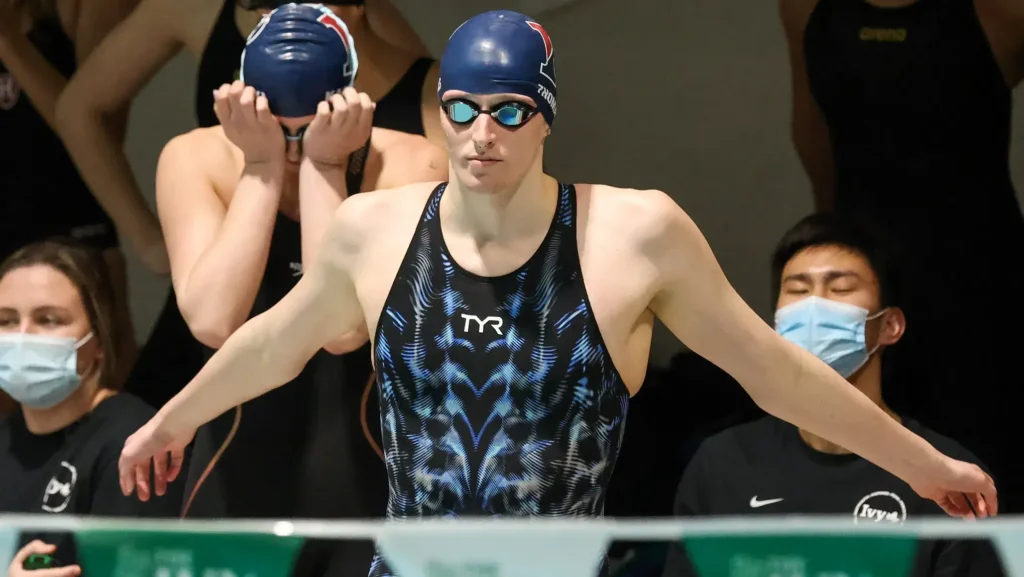
Lia Thomas, a transgender swimmer who made national headlines in 2022 for winning an NCAA Division I title, has had her records adjusted, though not fully erased, in a compromise reached under a new executive order issued by former President Donald Trump.
The announcement comes after months of investigation into Penn’s adherence to Title IX, the federal law that prohibits sex-based discrimination in federally funded education programs.
Federal Agreement and Record Adjustments
On Tuesday, July 1, the Department of Education confirmed it had reached a “resolution agreement” with the University of Pennsylvania, requiring the school to retroactively apply Trump-era executive orders to student athletics policies.
Under this agreement, the university will ban transgender women from competing in women’s sports and amend official athletic records to reflect competitors’ sex assigned at birth. The records previously attributed to Thomas will now list the cisgender athletes who would hold those titles under the current rules.
While Thomas’ name remains in Penn’s swimming archive, it now appears with a footnote stating she was “competing under eligibility rules in effect at the time” when she set records in the 100, 200, and 500-yard freestyle during the 2021–22 season.
ADVERTISEMENT
University Response
Penn President J. Larry Jameson called the situation “complex” in a statement Tuesday. He noted that the university was in compliance with NCAA and Title IX guidelines as they existed when Thomas competed. However, due to the policy changes, Penn is now obligated to comply with Executive Orders 14168 and 14201, signed in early 2025.
“We must comply with federal requirements, including executive orders, and NCAA eligibility rules,” Jameson said. “At the same time, we remain committed to ensuring a respectful and welcoming environment for all students.”
As part of the agreement, Penn will also release a public statement reaffirming its compliance with Title IX and issuing an apology to female athletes who may have felt disadvantaged or distressed by the previous policies.
Ongoing Questions About Title Status
While the updated records signal a major shift in the university’s athletics policy, it remains unclear whether Lia Thomas will officially lose her NCAA and Ivy League titles.
The Department of Education’s civil rights case against the university has been closed as part of the agreement, ending a months-long investigation into the school’s adherence to evolving federal regulations. The university emphasized that the decision helps them avoid “significant and lasting implications” had the investigation continued unresolved.
Looking Ahead
As the NCAA and educational institutions continue to navigate shifting legal and political landscapes around gender inclusion, the case of Lia Thomas remains emblematic of the broader cultural tensions surrounding sports, identity, and equity.
ADVERTISEMENT
For now, the University of Pennsylvania says it is focused on compliance and community: “We have brought this investigation to a close and remain committed to fostering an inclusive campus,” Jameson stated.
Whether or not Thomas’ NCAA wins will remain recognized by the national organization remains unresolved, leaving lingering uncertainty about how such cases will be handled in the future.