


Summary:
-
Earlier this month, Ginko launched an AI tool to help parents navigate raising children in a digital world.
-
Ginko offers personalized advice, trend updates, and playbooks for families managing screen time and online habits.
-
Co-founded by Larissa May and Raghu Kiran Appasani, Ginko aims to provide non-judgmental support and clinical credibility.
Earlier this month, Ginko announced its public launch of a new AI-powered tool built to help parents navigate the challenges of raising children in a digital world. Co-founded by digital wellness activist Larissa May and child psychiatrist Raghu Kiran Appasani, Ginko positions itself as a “24/7 guide” for families managing screen time, social media risks, and healthy online habits.
What is Ginko?
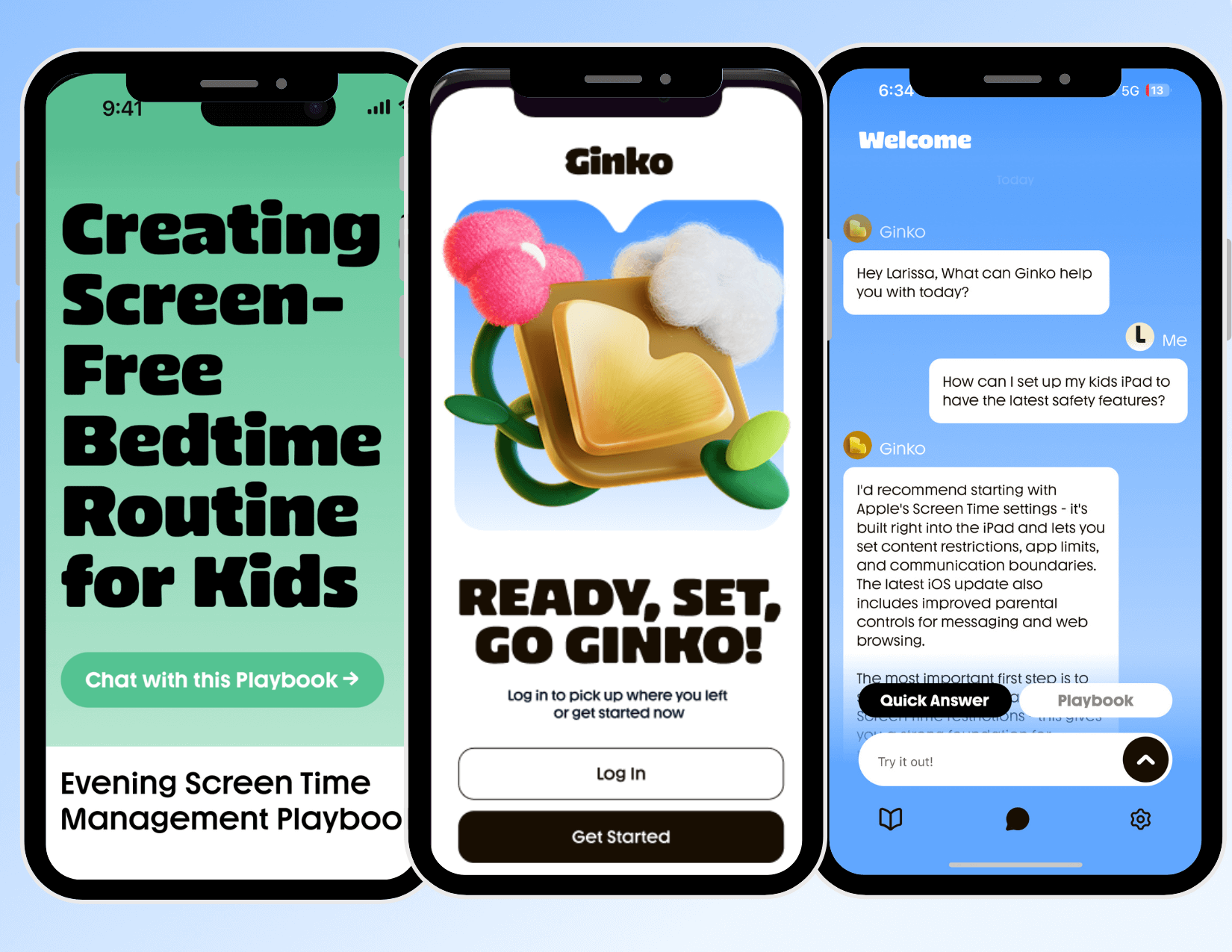
Ginko is designed for families with children ages 6 to 14. The platform offers a parent-facing chat interface that delivers personalized advice, daily trend updates (like rising apps or viral challenges), and “playbooks” tailored to age, needs, and neurodiversity (e.g. ADHD or autism). The app also flags moments when professional care may be needed, helping parents decide when to consult a mental health clinician or pediatrician.

Critically, the team emphasizes that Ginko is HIPAA-compliant and was developed with input from a clinical advisory board of psychiatrists, pediatricians, and family therapists.
“Today marks the public launch of Ginko, a new AI-powered tool built to help parents navigate the challenges of raising children in a digital world. Co-founded by digital wellness activist Larissa May and child psychiatrist Raghu Kiran Appasani, Ginko positions itself as a “24/7 guide” for families managing screen time, social media risks, and healthy online habits,” shared Founder Larissa May in a blog post.
According to the company, families report more than 500 screen-related conflicts annually—and yet many pediatricians do not address screen use during consultations.
ADVERTISEMENT
In terms of business, Ginko offers a subscription model (with a free trial period).
May is already known in digital wellness circles as the founder of the nonprofit #HalfTheStory, an initiative aimed at empowering youth to build healthier relationships with social media and technology. She launched the project while studying at Vanderbilt University.
May’s advocacy work has made her a frequent speaker and commentator on mental health, screen time, and youth media literacy. Her past entrepreneurial experience includes collaborations with D2C brands (such as Kin Euphorics and Otherland).
Raghu Kiran Appasani, MD serves as co-founder and chief medical officer of Ginko. He is central to the clinical oversight of the platform.
Ginko has already raised seed funding: in May 2025, the company announced a $1.5 million seed round, led by investors including Kodori Ventures, Zema Joaquin, and Evan Sharp.
ADVERTISEMENT
Ginko enters a crowded field of parental controls, monitoring apps, and wellness tools—but it aims to differentiate itself by blending clinical credibility with AI-based guidance and non-judgmental support. Rather than policing children’s screen use, the founders say their mission is to shift families from “screen fear to screen freedom.”
Still, the model faces questions. AI-driven advice in parenting and mental health domains requires strong guardrails, rigorous validation, and ongoing oversight. The claim of HIPAA compliance is a necessary baseline, but transparency around data use, algorithmic bias, and the limits of AI “therapy” will matter heavily to early adopters and critics.
For now, Ginko is available in the U.S. only, with expansion on the roadmap.