

Summary:
-
Walk into any home and find HVAC systems as the main energy culprit, but there are ways to balance comfort and cost.
-
Air leaks, poor insulation, and inefficient habits make HVAC systems work harder, wasting resources – seal leaks and improve insulation instead.
-
Smart thermostat strategies, proper fan use, regular maintenance, and system upgrades can significantly reduce heating and cooling costs.
Walk into any home during a sweltering summer afternoon or a frigid winter evening, and you’ll find the same culprit behind sky-high energy bills: your HVAC system working overtime. Heating and cooling account for nearly half of the average household’s energy consumption, making them the undisputed champions of energy usage. The good news? You don’t have to choose between comfort and cost.
Understanding Your Energy Enemies
Your heating and cooling systems are power-hungry by nature. They’re conditioning hundreds or thousands of cubic feet of air, fighting against outdoor temperatures, and running for hours each day. A central air conditioner can consume 3,000 to 5,000 watts per hour, while electric heating systems demand even more. That’s like running dozens of light bulbs simultaneously, day after day.
The problem intensifies when these systems work harder than necessary. Poor insulation, air leaks, outdated equipment, and inefficient habits all force your HVAC system into overdrive. Think of it as trying to fill a bathtub with the drain partially open. You’ll eventually get there, but you’ll waste tremendous resources in the process.
Seal the Deal on Air Leaks
Before spending thousands on a new HVAC system, address the invisible energy thieves in your home: air leaks. These gaps around windows, doors, electrical outlets, and pipes let conditioned air escape while inviting outdoor air inside. The result is a constant battle your heating and cooling systems can’t win.
ADVERTISEMENT
Start with a simple visual inspection on a windy day. Hold a lit incense stick near suspected leak points and watch for telltale smoke movement. Weather stripping around doors and windows provides an immediate improvement, while caulk works wonders for stationary cracks. Don’t forget the attic hatch, which often leaks more air than a poorly sealed window.
Insulation: Your Home’s Thermal Jacket
Proper insulation acts like a quality winter coat for your home, keeping warmth where you want it regardless of season. Attics, walls, and crawl spaces all need adequate insulation to prevent heat transfer. Most homes built before 1980 lack sufficient insulation by today’s standards, and even newer homes sometimes cut corners.
Check your attic insulation depth. Most climate zones require 10 to 14 inches of fiberglass insulation or its equivalent. If you can see the ceiling joists, you need more. Adding insulation is one of the most cost-effective energy improvements available, often paying for itself within a few years through reduced heating and cooling costs.
Smart Thermostat Strategy
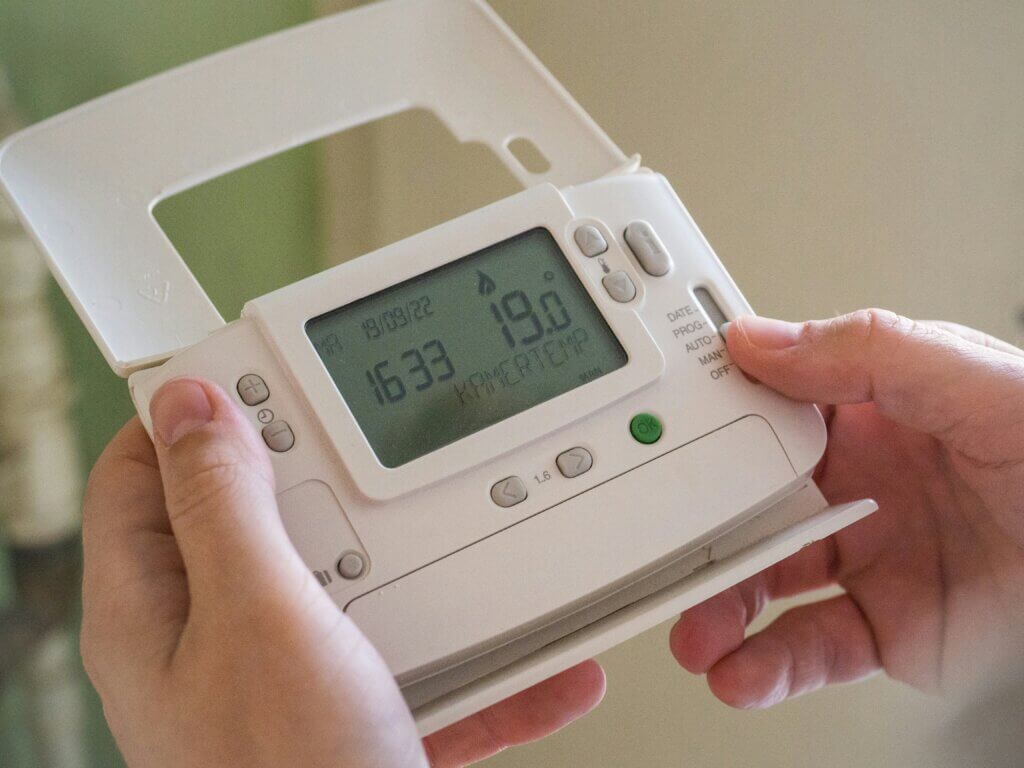
Your thermostat deserves more attention than it typically receives. Every degree you adjust can save three to five percent on heating and cooling costs. During summer, set your thermostat to 78 degrees when home and higher when away. In winter, aim for 68 degrees while awake and lower while sleeping.
ADVERTISEMENT
Programmable and smart thermostats automate these adjustments, ensuring you’re not cooling or heating an empty house. They learn your schedule, adjust based on outdoor temperatures, and provide detailed energy reports. The investment typically returns within two years through energy savings alone.
The Fan Alternative
Ceiling fans offer a surprisingly effective way to reduce HVAC dependence. These simple devices create air movement that makes rooms feel four to six degrees cooler in summer without actually changing the temperature. Different types of ceiling fans serve various purposes throughout your home. Standard downrod fans work well in rooms with tall ceilings, while hugger or flush-mount fans suit rooms with lower clearance. Outdoor-rated fans handle covered patios, and decorative models combine function with style in living spaces.
The key is using fans correctly. In summer, blades should rotate counterclockwise when viewed from below, pushing air downward for a cooling breeze. Winter calls for clockwise rotation to gently circulate warm air trapped near the ceiling. Remember to turn fans off when leaving a room since they cool people, not spaces.
Maintenance Matters
A neglected HVAC system works harder and costs more to operate. Replace air filters monthly during heavy use seasons and every three months during moderate weather. Dirty filters restrict airflow, forcing your system to run longer for the same result.
Schedule professional maintenance annually before heating and cooling seasons. Technicians clean coils, check refrigerant levels, calibrate thermostats, and identify potential problems before they become expensive failures. A well-maintained system runs 15 to 20 percent more efficiently than a neglected one.
Consider an Upgrade
If your HVAC system exceeds 15 years old, replacement often makes financial sense. Modern systems boast efficiency ratings far exceeding older models. A new high-efficiency air conditioner can cut cooling costs by 30 to 50 percent compared to a system from the 1990s.
Look for ENERGY STAR certified equipment with high SEER ratings for air conditioners and AFUE ratings for furnaces. While these systems cost more upfront, energy savings quickly accumulate. Many utilities and government programs offer rebates that further reduce the initial investment.
The Bottom Line
Taming your heating and cooling energy hogs doesn’t require drastic lifestyle changes or uncomfortable compromises. Small improvements compound over time, transforming energy gluttons into reasonable consumers. Start with low-cost solutions like sealing air leaks and adjusting thermostat settings, then progress toward larger investments as budget allows. Your wallet and the planet will thank you.