

Summary:
-
Pope Leo XIV’s first encyclical, Magnifica Humanitas, emphasizes regulating AI and prioritizing human dignity over profit.
-
Leo signed the letter on May 15, addressing AI’s impact on labor, education, family, democracy, and warfare.
-
The encyclical calls for legal frameworks, oversight, and truth in the face of AI’s potential for manipulation and totalitarianism.
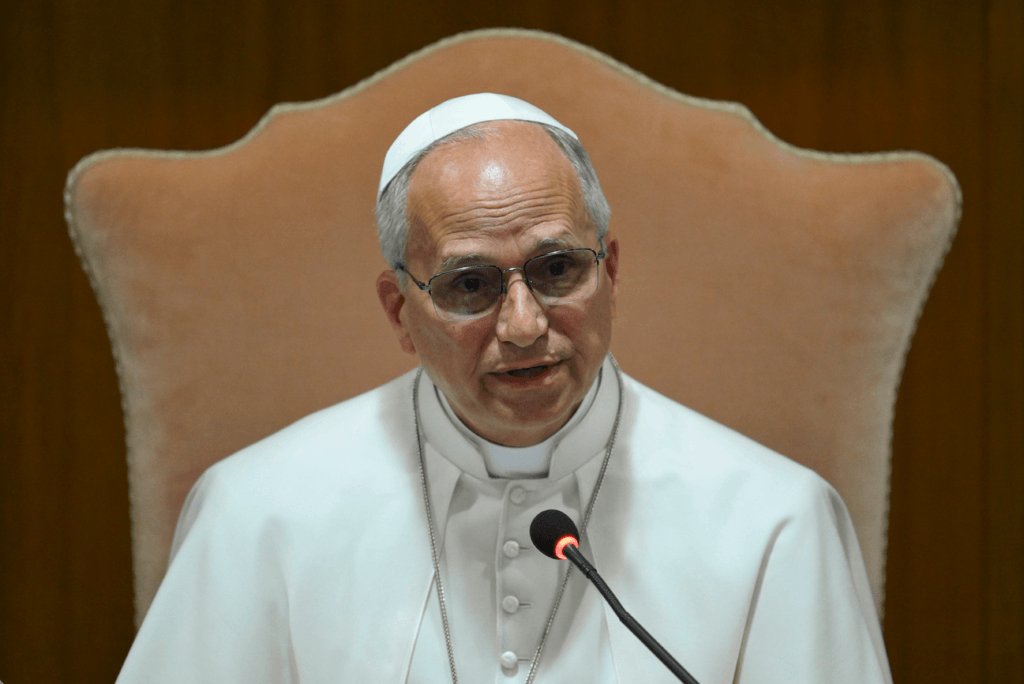
Pope Leo XIV unveiled his first encyclical Monday, a roughly 42,000-word document titled Magnifica Humanitas, or “Magnificent Humanity,” calling for robust regulation of artificial intelligence and urging developers, lawmakers and educators to prioritize human dignity over profit.
The pope signed the letter on May 15 at the Vatican, choosing the 135th anniversary of Rerum Novarum, Pope Leo XIII’s 1891 encyclical on labor written during the Industrial Revolution. The first American pope is positioning AI as this century’s defining labor and dignity question.
“It is not enough to invoke ethics in the abstract; robust legal frameworks, independent oversight, informed users and a political system that does not abdicate its responsibility are required,” Leo wrote.
The encyclical addresses AI’s role across work, education, family life, democracy and warfare. Leo warned that disinformation has “found a powerful amplifier” through AI’s ability to manipulate content, images and videos, and that “indifference to the truth leads, slowly but surely, to a descent to totalitarianism.”
On labor, the pope wrote that the workplace must be governed by “the protection of employment opportunities and the irreplaceable role of the individual,” cautioning that “the pursuit of greater profits cannot justify choices that systematically sacrifice jobs.”
Leo dedicated the final chapter to AI in warfare, calling for ethical constraints and proactive peacebuilding to slow what he described as a technological arms race. The pope called just war doctrine “now outdated,” while affirming a narrow right to self-defense.
ADVERTISEMENT
The presentation drew attention from Silicon Valley. Anthropic co-founder Chris Olah attended the unveiling at the Vatican, alongside theologians and clergy. The Vatican’s decision to include Anthropic reflects its decade-long effort to engage Silicon Valley over the human cost of AI, even as Leo’s text criticizes the concentration of power and data in the hands of a small number of private companies.
“I am convinced that this will prove to be a defining document for our era, a profound and prophetic document,” said Paolo Carozza, a Notre Dame law professor and chair of the Meta oversight board.
Leo opens the encyclical by saying humanity faces a pivotal choice, “either to construct a new Tower of Babel or to build the city in which God and humanity dwell together.”